AI expert witness: what to expect in court
When AI-generated or manipulated media becomes evidence in litigation, courts require qualified expert testimony. Here's what AI expert witnesses do, how they qualify, and what their testimony covers.
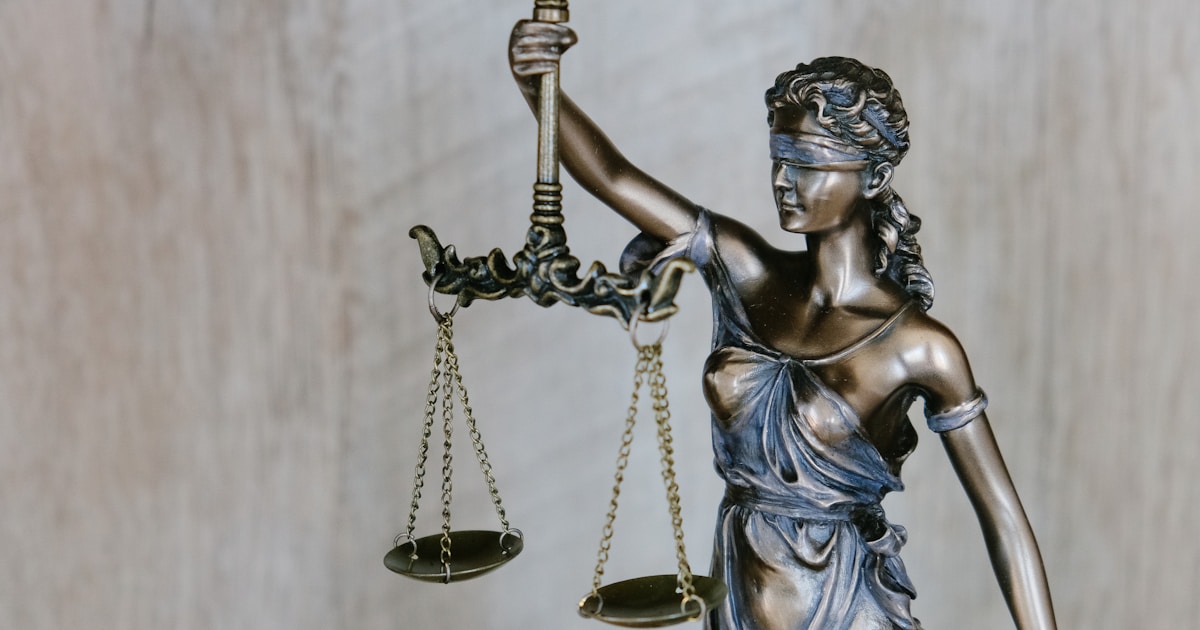
An AI expert witness is a qualified professional who testifies in court about the authenticity, origin, or integrity of digital media — photographs, video, audio recordings, or documents — where artificial intelligence generation or manipulation is at issue. As AI-generated content becomes more sophisticated and more frequently introduced in litigation, courts are increasingly requiring expert testimony to evaluate whether digital evidence is authentic.
This guide covers when you need an AI expert witness, how they qualify under the Daubert standard, what their testimony covers, how expert reports are structured, how to prepare for cross-examination, and what the process costs.
When you need an AI expert witness
AI expert witnesses appear in an expanding range of proceedings:
Civil litigation: Divorce proceedings where one party claims surveillance photos are fabricated. Employment disputes involving allegedly manipulated video evidence. Business litigation where communications, contracts, or photographs are disputed. Defamation cases involving deepfake video.
Criminal proceedings: Cases where the defense argues that photographic evidence was manipulated or AI-generated. Prosecutions involving child exploitation material that may be AI-generated. Cases where alibi evidence is a photograph or video.
Insurance disputes: Carriers contesting claims on the basis that submitted photos are fraudulent. Claimants challenging carrier denials when they believe detection errors occurred.
Intellectual property: Disputes over whether a creative work was AI-generated, with implications for copyright registration and ownership.
Regulatory proceedings: Enforcement actions where documentary evidence is contested on authenticity grounds.
You need an AI expert witness when:
- You intend to introduce digital media evidence that the opposing party may challenge as AI-generated or manipulated.
- You are challenging digital media evidence introduced by the opposing party.
- The court requires technical explanation of how AI detection works, what its limitations are, and how a specific conclusion was reached.
For a practical overview of how AI-generated content affects evidence in court, see our legal evidence use case page.
The Daubert standard and expert qualification
In federal courts and most state courts, expert witness testimony is governed by Federal Rule of Evidence 702 and the framework established in *Daubert v. Merrell Dow Pharmaceuticals* (1993). Under Daubert, trial judges act as gatekeepers who must assess whether proposed expert testimony:
- Is based on sufficient facts or data
- Is the product of reliable principles and methods
- Reflects a reliable application of those principles and methods to the facts of the case
For AI expert witnesses, this means the expert must demonstrate:
Scientific validity: The detection methods used must be accepted in the relevant scientific community. Courts have increasingly recognized multi-model AI detection, forensic metadata analysis, and frequency-domain analysis as valid scientific methods, particularly when published peer-reviewed research supports them.
Testing and error rates: The expert must be able to state the known or potential error rates of the detection methods used. This is where single-model detectors create vulnerability — if the method's error rate isn't well-characterized, it's harder to defend under Daubert.
Peer review and publication: Experts whose methods are described in peer-reviewed literature are better positioned to survive Daubert challenges.
Relevant expertise: The expert typically holds advanced degrees in computer science, electrical engineering, or a related field, with specific publication or professional experience in digital forensics, AI/ML, or image authentication.
Expert qualification is case-specific. An expert who qualifies in one proceeding may face a Daubert challenge in another. Opposing counsel will scrutinize methodology, training data, error rates, and the expert's prior testimony record.
What AI expert witness testimony covers
An AI expert witness may testify about:
Whether a specific image or video is AI-generated: The primary question in many cases. The expert explains what analysis was conducted, what signals were detected, what those signals indicate, and what confidence level the conclusion carries.
Whether digital media has been manipulated: Distinct from generation — an authentic photo that has been edited (spliced, cloned, color-corrected to misrepresent damage, etc.) may be authentic at its core but manipulated in relevant ways. The expert identifies localized inconsistencies.
How AI generation systems work: Courts often need foundational testimony explaining what generative AI is, how models like diffusion systems and GANs produce images, and why those processes leave detectable signatures.
The limitations of detection: Honest expert testimony includes candid discussion of limitations — what the methods can and cannot reliably detect, what conditions reduce accuracy, and what threshold confidence level is appropriate for the conclusion offered.
Chain of custody and metadata integrity: Whether metadata is authentic, whether the file has been altered since capture, and what the provenance record shows.
Comparison analysis: Comparing disputed media with known authentic or known synthetic samples to establish patterns.
Expert testimony should be offered at an appropriate confidence level. "This image was AI-generated with 94% confidence" is a scientifically defensible statement. "This image was definitely AI-generated" may be challenged as overstating the method's certainty.
Components of an AI forensic expert report
Before testifying, an AI expert witness typically prepares a written expert report. Under Federal Rule of Civil Procedure 26(a)(2)(B), the report must include:
- Complete statement of opinions: All opinions the expert will offer and the basis for each.
- Facts and data considered: Every source of information the expert relied upon.
- Exhibits: Any charts, graphs, detection output visualizations, or other exhibits to be used at trial.
- Expert qualifications: Credentials, publications, prior testimony.
- Compensation: The expert's fee arrangement.
- Prior testimony list: All cases in which the expert has testified in the past four years.
A well-structured AI forensic expert report typically includes:
- Executive summary: The core conclusion and confidence level in plain language.
- Evidence received: A log of the media files analyzed, with hash values confirming file integrity.
- Methodology: A detailed description of each analysis method used, the tools or models employed, and the parameters.
- Findings by analysis layer: Results from each detection method separately — metadata analysis, noise pattern analysis, frequency domain analysis, GAN/diffusion detection, splicing detection.
- Integrated conclusion: How the individual findings combine into the overall opinion.
- Limitations and caveats: Explicit statement of what the analysis cannot determine.
- Appendices: Raw detection output, sample images, model documentation.
CheckReality's deepfake detection platform generates forensic reports designed for legal use, with the detail level and structure that supports expert witness report preparation.
Cross-examination preparation
AI expert witnesses face rigorous cross-examination on several predictable lines:
Training data challenges: "Your model was trained on images from 2022. The generator that allegedly produced this image was released in 2025. How do you know your model detects images from this newer system?" This challenge goes to whether the method is valid for the specific evidence at issue. Experts must demonstrate that their models are continuously updated and have been tested against current generation systems.
Error rate challenges: "What is the false positive rate of your detection method?" If the expert cannot cite a specific, peer-reviewed error rate, this opens an attack on the method's reliability. Production-grade systems maintain published benchmarks that experts can cite.
Alternative explanations: "Could a legitimate photograph taken under unusual lighting conditions produce the same frequency domain signatures you identified?" Experts must be prepared to address alternative explanations for detected signals.
Model interpretability: "Can you explain exactly why your model flagged this image?" Black-box model outputs are vulnerable to cross-examination if the expert cannot provide a mechanistic explanation. Reports that include layer-by-layer analysis or attention maps are more defensible.
Prior testimony inconsistency: Opposing counsel will review all prior cases in which the expert has testified and look for inconsistent statements about methodology, accuracy, or conclusions.
Adversarial examples: "Are you aware that AI-generated images can be post-processed to fool detectors?" The existence of adversarial attacks on detection systems is a legitimate cross-examination topic. Experts must address this honestly while explaining why the specific evidence is unlikely to be an adversarial example.
Preparation for cross-examination includes mock examination sessions, review of prior testimony, and documentation of model update history and validation benchmarks.
How to find a qualified AI expert witness
Qualified AI expert witnesses typically come from:
Academic forensic research: Computer science faculty specializing in digital forensics, image authentication, or adversarial machine learning. University forensic science programs are a starting point.
Digital forensics firms: Established firms offering forensic analysis services often have staff qualified to testify. Look for firms with demonstrable case history and published methodology documentation.
Detection platform providers: Companies that build and operate AI detection systems can sometimes provide expert witnesses or refer to qualified experts in their network. CheckReality works with legal teams on expert witness support for cases involving our detection analysis.
Expert witness directories: The American Board of Forensic Document Examiners and similar professional bodies maintain directories. For AI-specific expertise, IAAI (International Association of Arson Investigators) and HTCIA (High Technology Crime Investigation Association) can be starting points.
When evaluating a potential expert witness:
- Review their publication record for peer-reviewed work in image forensics or AI detection
- Request their prior testimony list and review depositions or trial transcripts
- Assess their ability to explain complex technical concepts to a non-technical judge or jury
- Confirm they have direct experience with the detection methods that will form the basis of their opinion
- Ensure they can testify about current generation systems, not just older methods
Cost expectations
AI expert witness fees vary significantly based on experience, case complexity, and scope of work. General ranges in 2026:
Initial case evaluation: $2,000–$8,000 for review of evidence and preliminary opinion.
Expert report preparation: $5,000–$25,000 depending on complexity of analysis and number of items examined.
Deposition testimony: $3,000–$10,000 per day plus preparation time.
Trial testimony: $5,000–$15,000 per day plus preparation time.
Forensic analysis by detection platform: $500–$5,000 depending on volume and report detail level, often in addition to expert witness fees.
Budget for the full process including evidence review, report drafting, deposition, and trial. Complex cases involving multiple media items or novel generation methods carry higher costs.
Book a demo to discuss how CheckReality's forensic reports support legal proceedings, including the detail level required for expert witness preparation.
For the broader picture of AI-generated content in legal proceedings, see our post on digital evidence authentication in courts.
Ready to verify what's real?
See how CheckReality authenticates images and documents for enterprise teams.
Book a demo